Two clutches, two sets of gears and a computer that pre-selects the next ratio: the story of Volkswagen's DSG and the suppliers behind it.
A DSG is Volkswagen's dual-clutch automatic: two clutches and two shaft sets let it pre-select the next gear and shift without a torque converter. BorgWarner designed it, LuK made the DQ200 clutch pack, and Getrag and ZF supply rival dual-clutch units to other makers.
The gearbox in the 2003 Golf R32 was not born at Volkswagen. The direct-shift gearbox was designed by BorgWarner and licensed to the Volkswagen Group, with engineering support from IAV GmbH, while the very first dual-clutch transmissions came out of Porsche's in-house work for the Porsche 962 racing car in the 1980s.
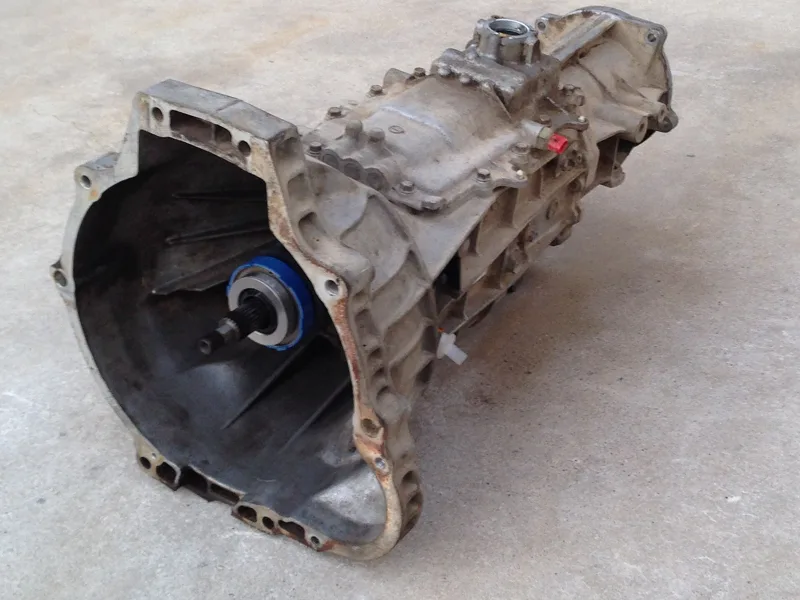
A DSG gearbox is, in plain terms, two manual gearboxes and two clutches sharing one casing, run by a computer. That arrangement removes the pause between gears, and it has grown into a family that runs from six-speed and seven-speed units to hybrids and Audi's longitudinal version. Other badges rely on different specialists, from the American firm BorgWarner to the German maker Getrag.
What is a DSG gearbox?
DSG stands for Direktschaltgetriebe, German for direct-shift gearbox, and the name belongs to the Volkswagen Group. Technically it is an electronically controlled, multiple-shaft automatic with dual clutches, built either as a transaxle for transverse engines or in a more traditional layout. The driver can leave it to pick gears, or take over and shift semi-manually.
Because two independent clutches do the work, a DSG achieves faster shift times than a conventional automatic, and it has no torque converter. That is the fluid coupling at the heart of the epicyclic automatics most drivers know.
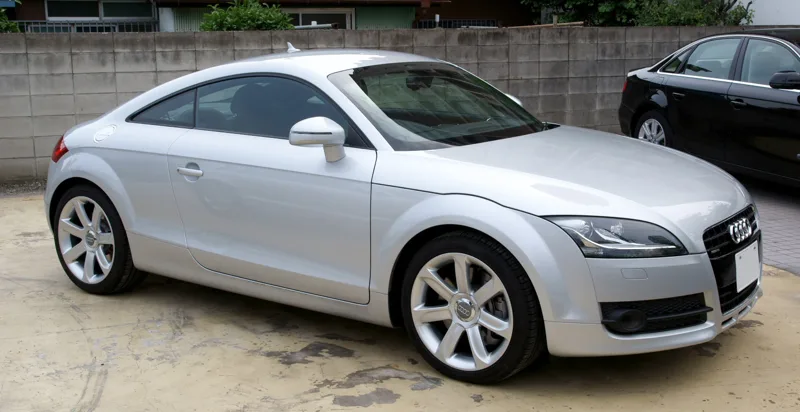
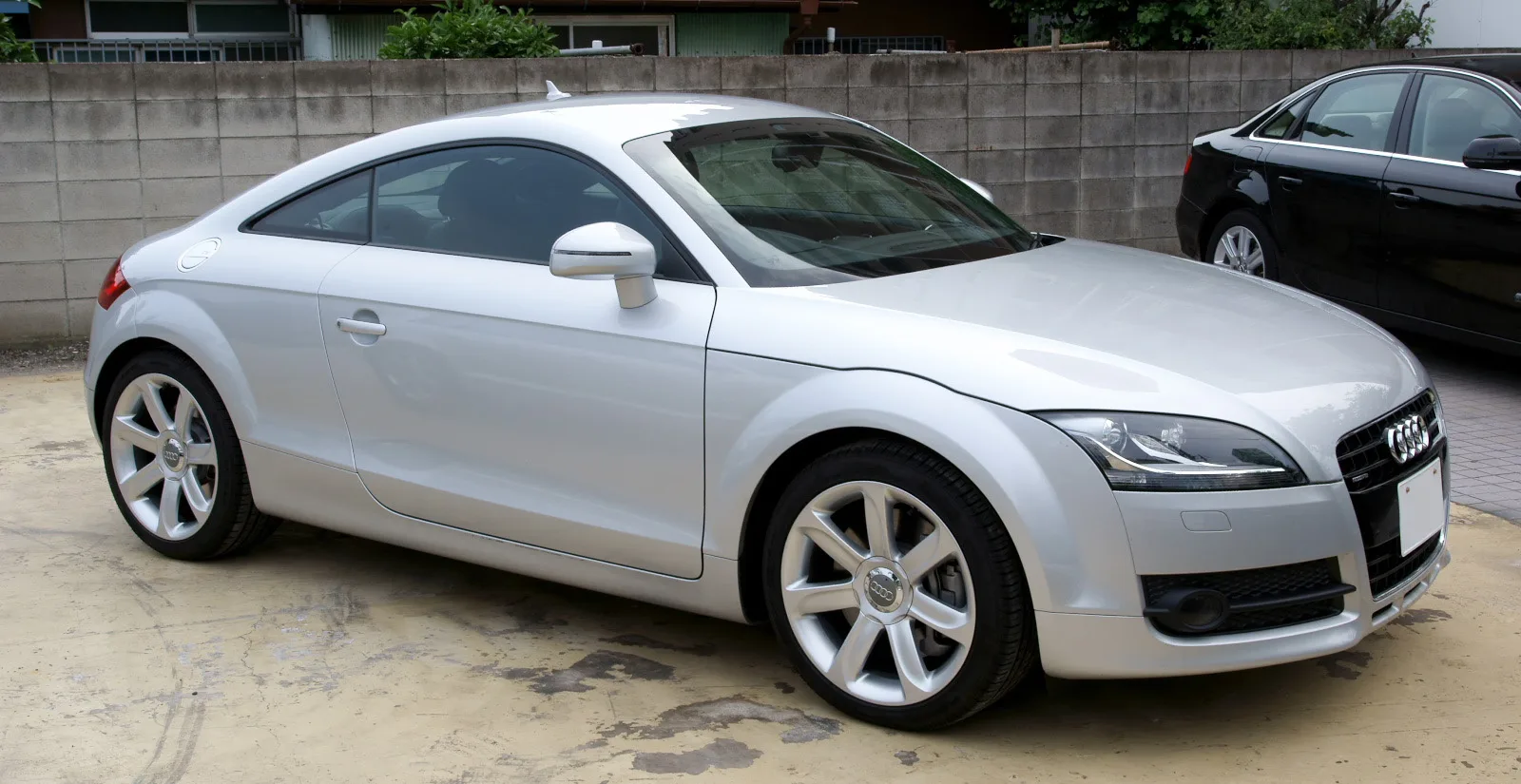
The first series-production use came in 2003, in the German-market Golf Mk4 R32, and soon afterwards the original Audi TT 3.2 and the 2004-on New Beetle TDI. For the first few years it was offered only in transversely mounted, front-wheel-drive or Haldex-based four-wheel-drive layouts.
Power is passed from one clutch to the other, so the drive is never cut.
How does a DSG work?
Picture two relay runners standing side by side. One is running with the baton while the other is already moving at the speed of the next leg, ready to take the handover without anyone slowing down. A DSG does the same with torque.
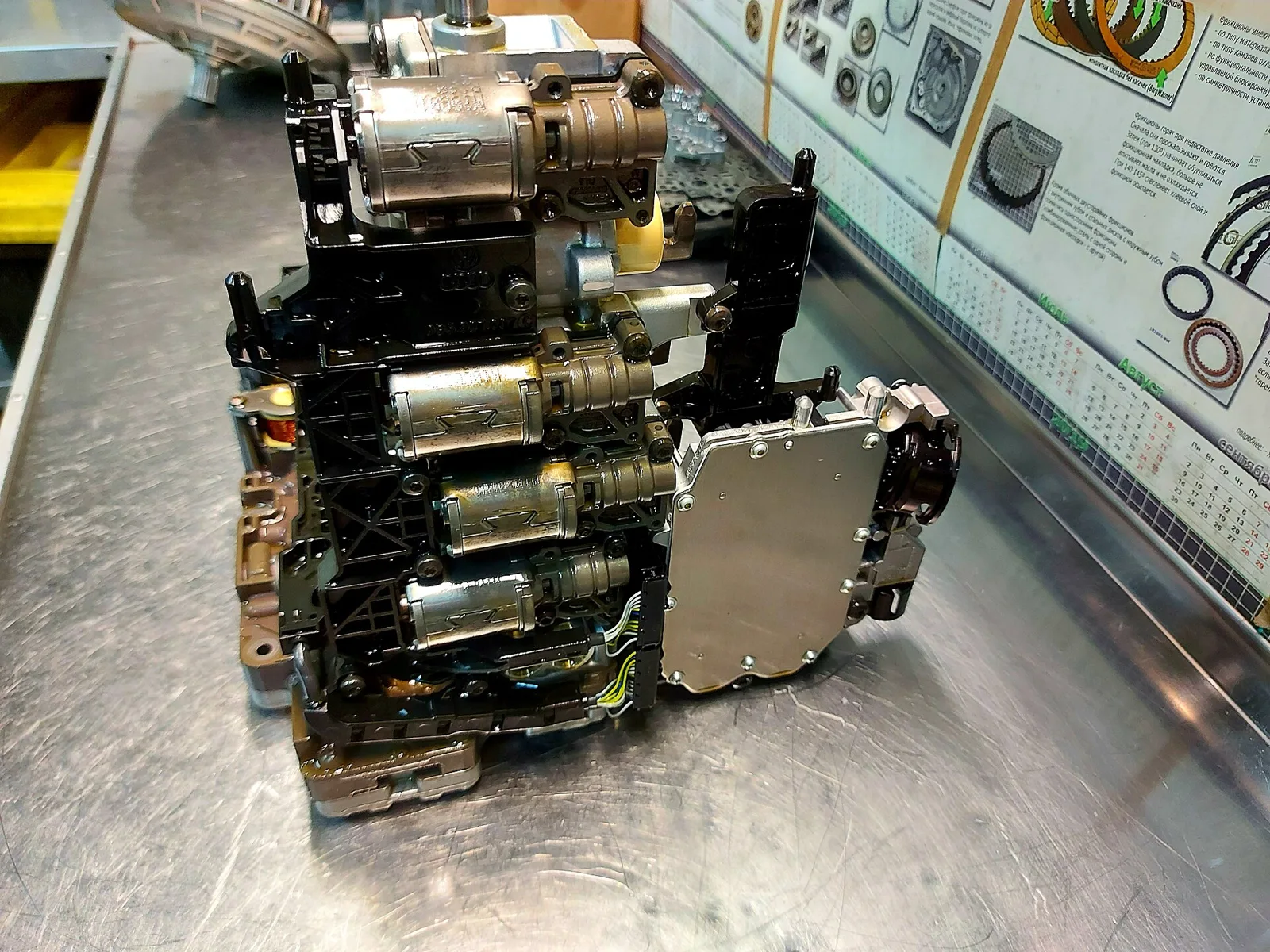
The engine feeds two clutch packs. The outer pack, larger in diameter and therefore able to carry more torque, drives first, third and fifth gears, seventh where it is fitted, and reverse. The inner pack drives second, fourth and sixth. Each pack in the six-speed unit is a stack of four small wet plates, much like the multi-plate clutch in a motorcycle, and because space is tight the two packs sit one inside the other, on hollow shafts that are also nested.
The trick is that the idle half of the gearbox is never idle. While one clutch carries the drive in third, the other half of the box has already been set up in fourth. A shift then means releasing one clutch as the other bites, so power is passed across rather than interrupted.
Talk of an upshift lasting about 8 milliseconds should be treated with care: that figure has not been confirmed by independent data, and the manufacturer does not claim it. What is fair to say is that the DSG is among the quickest-shifting transmissions on the market.
DSG vs automatic: what the driver feels
From the driver's seat the DSG looks like an ordinary automatic. The floor-mounted lever moves straight fore and aft, with no dog-leg, and a button on the lever stops an accidental move into the wrong position.
Park is a proper mechanical lock: both clutches open, every gear-set disengaged and a lock applied to the crown wheel of the internal differential. It must be used only when the car is stationary, and the ignition key cannot be removed until the lever is there. Neutral also releases both clutches and every gear, but the parking lock is off.
To pull away, the driver presses the brake and selects D from neutral. The gearbox prepares second gear on one shaft and the reverse clutch on the other. Lift off the brake and the clamping force on the second-gear clutch rises, so the car creeps; press the throttle and the clutch takes up the drive. Stamp the pedal to the floor and the box kicks down to first, with a brief hesitation while it drops second and picks first. From then on, the computer decides each upshift from road speed and how far the throttle is open.
Wet clutch or dry clutch?
Two clutch designs run through the DSG family. The wet version bathes its plates in oil, and in this family the wet-clutch boxes carry the higher torque ratings. The dry version uses a single plate per clutch and needs far less fluid.
The difference shows up in the filler caps. The seven-speed DQ200 with its two dry single-plate clutches needs only 1 litre of special DSG fluid to run its hydraulics, plus 1.7 litres of oil in the gear section. The wet-clutch gearboxes use 7 litres for both hydraulics and lubrication, 5.5 litres of it changed at a service. The DQ200's clutch pack was designed by LuK Clutch Systems, so even Volkswagen's own gearbox carries a specialist's work inside.
The DSG family at a glance
| Code | Introduced | Gears | Clutches | Torque limit | Weight |
|---|---|---|---|---|---|
| DQ250 | 2003 launch | 6 | Wet | 350 N m (260 lb ft) | 93 kg (205 lb) |
| DQ200 | Start of 2008 | 7 | Dry | 250 N m (180 lb ft) | 70 kg (150 lb) |
| DQ500 | September 2009 | 7 | Wet | 600 N m (440 lb ft) | 96 kg (212 lb) |
| DL501 (Audi, longitudinal) | Late 2008 | 7 | Wet | 600 N m (440 lb ft) | 141.5 kg (312 lb) |
From DQ250 to DQ381
Every transverse DSG carries an internal code starting DQ, short for DSG quer, the German word for transverse. The DQ250 was the first to reach production in mainstream Volkswagen Group models. It is built at the group's Kassel plant, with a daily output of 1,500 units, and it was designed for engines producing up to 350 N m.
The dry-clutch DQ200 followed at the start of 2008 for smaller cars and smaller engines. It went into the Golf Mk6, Polo Mk5, SEAT Ibiza and Skoda Yeti, particularly with the 1.2 TSI/TFSI engine, and it is rated for up to 250 N m.
For heavier work Volkswagen launched the DQ500 in September 2009, built to support up to 600 N m. It debuted in the Transporter T5 2.0 TDI, then reached the Tiguan 2.0 TDI 4Motion and the BiTDI versions of the Passat, Tiguan and Skoda Superb. Petrol cars received it from 2010 in the Audi TT RS 8J, badged S-Tronic. In the Arteon R and Tiguan R it is paired with a Magna torque-splitting rear differential to provide four-wheel drive. The four-wheel-drive version weighs 3 kg (6.6 lb) more than the two-wheel-drive one.
Emissions drove the next steps. The seven-speed DQ380 arrived in 2015 for the Chinese market, in the Golf and Magotan. It shares much of its mechanical and electronic hardware with the DQ500, including the mechatronic control unit, but is lighter, smaller and front-wheel drive only. Its extra gear brings a 3 g/km CO2 reduction compared with the DQ250.
The DQ381 followed in 2017 to meet European needs and replaces the DQ250 worldwide. Longer gearing, bearings and seals with less friction, and a rethought hydraulic system save a further 5 to 10 g/km against the DQ380. Unlike that gearbox it comes in front-drive form and in an all-wheel-drive form with a Haldex rear differential.
Audi's longitudinal S tronic
Audi needed something different for engines mounted lengthways. In late 2008 an all-new seven-speed version, code DL501, entered series production, reaching certain Audi models from early 2009. It keeps the concentric wet multi-plate layout of the original six-speed, but with more plates: 10 in the larger outer clutch for odd gears, 12 in the smaller inner clutch for the even gears.
Its lubrication is also different. Audi uses two separate oil circuits. One holds 7.5 litres (1.65 imp gal; 1.98 US gal) of synthetic automatic transmission fluid for the hydraulic clutches and mechatronics, while a second, smaller circuit takes 4.3 litres (0.95 imp gal; 1.14 US gal) of ordinary hypoid oil to look after the gears and differentials. The design is aimed at greater reliability by stopping debris and wear particles from one system contaminating the other.
The box can take up to 600 N m and engines of up to 330 kW (450 PS; 440 bhp). It weighs 141.5 kg (312 lb) with its lubricants and dual-mass flywheel. It first appeared in quattro all-wheel-drive models and is very similar to the Porsche Doppel-Kupplung, the PDK, supplied by ZF Friedrichshafen.
Hybrids and the DSG
Adding an electric motor meant adding a clutch. The DQ200e, first seen in 2008 in the Golf V TwinDrive prototype, stretched the clutch housing by 83 mm to hold an extra disengagement clutch and a hybrid module, sitting between crankshaft and flywheel as motor, generator and starter in one.
That prototype paired a 20-30 hp motor with a 2.0 PD TDI diesel and a 12 kWh lithium-ion battery, for roughly 30-50 km of electric range. About twenty were built and run in Lower Saxony. The diesel hybrid did not work out: it was overly complex, cold diesels in start-stop traffic created emissions problems, and reliability was poor. The programme was halted after two years in favour of petrol power, with part funding from the German Federal Ministry for the Environment.
A 2010 plug-in Golf VI TwinDrive with a 1.4 TSI petrol engine led to the production Jetta VI Hybrid of 2013. That car used a 110 kW (150 PS) 1.4 TSI, a 20 kW (27 PS) motor and a 1.1 kWh battery giving only about 1-2 km of electric running, and it was not a plug-in. Total production is estimated at 20,000 to 40,000, mainly for North America and China. The dry-clutch DQ200e limited its durability, and a more powerful wet-clutch system superseded it in 2014.
That system is the DQ400e, derived from the DQ250, which first appeared in the Golf Mk7 GTE in July 2014. It is front-wheel drive only and pairs with the 1.4 and later 1.5 TSI. The motor sits inside the gearbox assembly between engine and gearbox, with three clutches: K1 and K2 link the engine to the gearbox, and K0 connects the electric drive to the engine. K0 closes when the motor starts the engine, when the engine drives the car and when both power units work together, and it opens in electric-only driving. The same arrangement appears in the Passat GTE, Arteon, Tiguan, Transporter T7 e-Hybrid and equivalent Audi, SEAT and Skoda plug-in hybrids.
Because the car has no conventional starter motor, the third clutch also lets the electric motor bump-start the petrol engine whenever the lever is in N.
Getrag dual clutch: the independent supplier
Getrag was founded on 1 May 1935 in Ludwigsburg by Hermann Hagenmeyer. By 2011 it had 24 locations, about 12,500 employees and a turnover of three billion euros, and it supplied transmissions to BMW (Mini), Daimler, Ferrari, Mitsubishi, Porsche, Qoros, Renault, the Volkswagen Group and Volvo. It also ran three joint ventures: with Ford in Cologne, with Jiangling Motors, and with Dongfeng Motor. Its named competitors were Aisin, BorgWarner, Graziano and ZF.
Its range covered everything from plain manuals to dual-clutch automatics, hybrid systems and electric drivetrains. In July 2015 Magna Powertrain bought the company for $1.9 billion and gradually integrated it.
Getrag's dual-clutch catalogue reaches from Ferrari to the family hatchback. At the top sits the seven-speed 7DCL750 transaxle, found in the Mercedes SLS AMG, the Mercedes-AMG GT, the Ferrari California, 458 Italia, 488 GTB, F12 Berlinetta, FF (with all-wheel drive) and Portofino, and the second-generation Ford GT. The eight-speed 8DCL900 followed in the Ferrari Roma, Portofino M, SF90 Stradale and 296 GTB. In longitudinal cars, the 7DCI600 seven-speed served BMW's M3 from 2008 to 2018, the M5 from 2011 to 2016, the M6 from 2012 to 2018, the M4 from 2014 to 2020 and the M2 from 2016 to 2021.
Lower down the price range, the 6DCT450, also known as the Ford PowerShift, went into the Focus, C-Max, S-Max, Galaxy, Mondeo and Kuga as well as Volvo and Dodge models. The dry-clutch 6DCT250 powered the Fiesta, EcoSport, Megane, Scenic and Clio, and from 2015 the Smart Fortwo, Forfour and Renault Twingo. The 6DCT470 went into the Mitsubishi Lancer and Outlander, Peugeot 4007 and Citroen C-Crosser. The seven-speed wet-clutch 7DCT300 serves Renault's EDC, Mini and BMW front-drive cars from model year 2018, and the Ford Puma and Fiesta from model year 2020, with the 7DCT400 handling up to 400 N m.
BorgWarner: the engineering behind the DSG
BorgWarner is an American supplier based in Auburn Hills, Michigan. In 2023 it operated 92 locations in 24 countries, earned US$14.2 billion and employed about 39,900 people, ranking it among the world's 25 biggest car-industry suppliers. In 2022 the figures were about 52,000 people and US$15.8 billion in revenue.
The company was formed in 1928 from several businesses, among them Morse Equalizing Spring, Borg & Beck, Marvel-Schebler, Long Manufacturing, Warner Gear and Mechanics Universal Joint. Its gearbox pedigree runs deep. Warner Gear was among the first suppliers to develop the synchroniser that lets manual gear teeth mesh smoothly. In 1950 BorgWarner developed its first lock-up torque converter and a three-speed automatic, and the T-10 four-speed arrived in 1957, initially as a Corvette exclusive. The T-56 six-speed became standard in the Chrysler Viper and new Ford Mustangs in the early 1990s. A 1969 joint venture, Aisin-Warner, built automatic transmissions in Japan.
The Haldex Traction Systems business, best known for a wet multi-plate coupling for four-wheel-drive passenger cars, also joined BorgWarner. Away from the road, BorgWarner's EFR turbocharger has been fitted to every car in the IndyCar Series each season since 2012, and the Borg-Warner Trophy has been awarded to the winner of the Indianapolis 500 since 1936.
Where this goes next
Gearbox history has moved in step with electrification. The DQ381 replaced the DQ250 worldwide, and the DQ400e family carries the plug-in hybrid versions of the Golf, Passat, Arteon and Tiguan.
The two suppliers have chosen different routes. In July 2023 BorgWarner split off its fuel parts and aftermarket divisions as a separate listed company, PHINIA, on the New York Stock Exchange, a move tied to concentrating on electric-vehicle drivetrains. It now reports in three segments: air management, e-propulsion and drivetrain, and Joseph F. Fadool has been chief executive since February 2025. Getrag, for its part, has been integrated into Magna Powertrain since the 2015 purchase, with a portfolio that already included hybrid dual-clutch units such as the 6HDT200, 7HDT300 and 7HDT400.