Why valve area peaks at four or five valves, what grinding a cylinder head port can and cannot do, and how a tappet turns a rotating cam into an opening valve.
A multi-valve engine gives each cylinder three, four or five valves to increase valve area and breathing; four or five cover about 68% of the bore, the maximum. Porting reshapes the head's passages for flow, and tappets, hydraulic ones self-adjusting, open the valves from the camshaft.
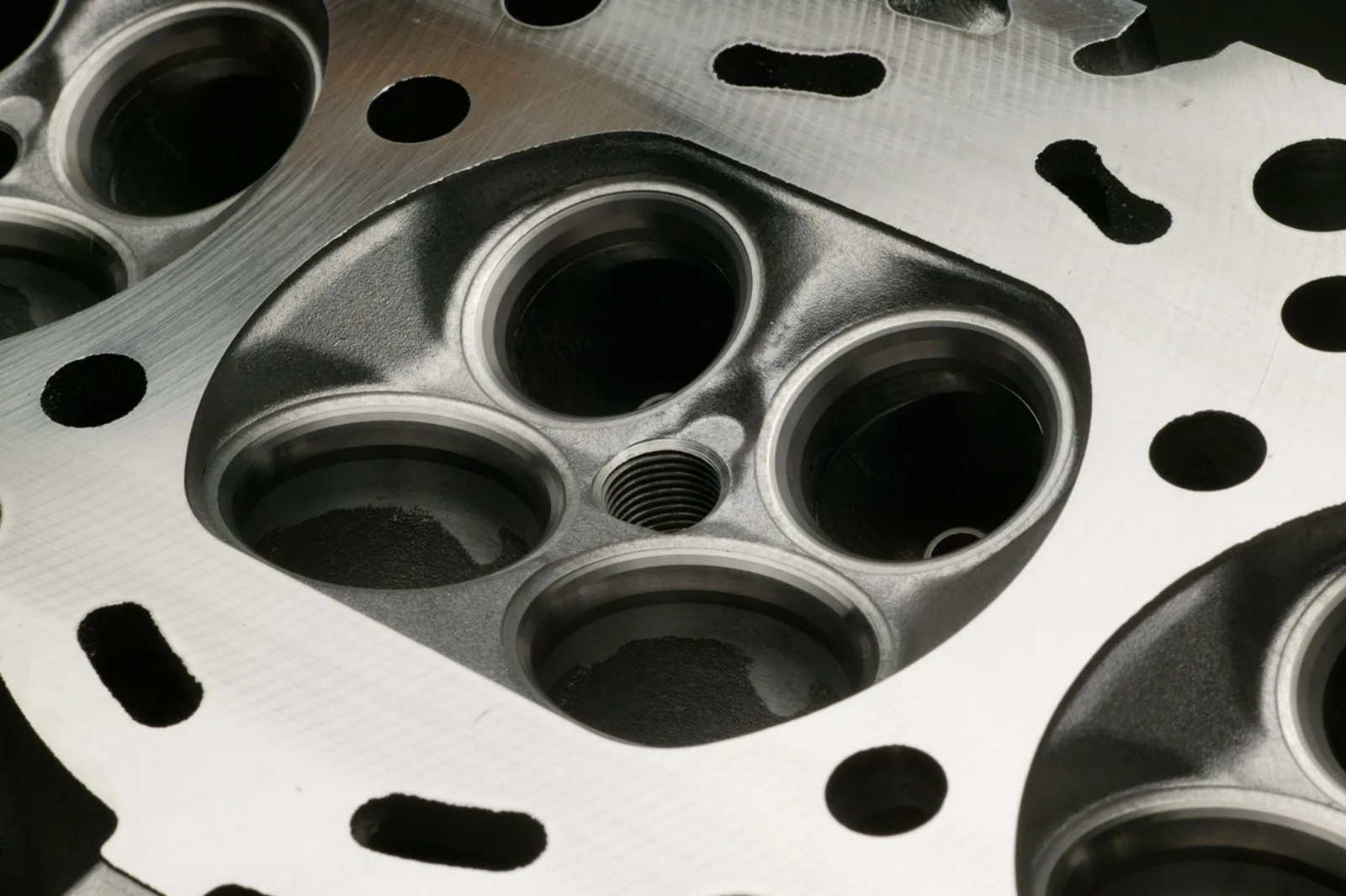
Fit more valves into a cylinder and you do not always get more valve area. By simple geometry, two equal valves cover about 50% of the bore, four or five cover 68%, and eight cover only 61%. Past five, the valves start to crowd one another out.
That ceiling explains why almost every multi-valve engine has three, four or five valves, and why the choice among them is a matter of cost and packaging as much as flow. Two other parts of the cylinder head decide how well an engine breathes and how long it lasts: the ports that carry air in and out, and the tappets that open the valves.
How does a multi valve engine breathe better?
A four-stroke engine cannot run on fewer than two valves per cylinder: one admits air and often fuel, the other releases the burnt gas. Designers fit three, four or five. Adding valves adds valve area, which improves the flow of gas in and out, and that improves combustion, volumetric efficiency and power. The extra valves are also smaller, so each has less mass to throw around, which can reduce wear on every cam lobe and allows more power at high revs without valve float.
There are quieter benefits. The geometry lets the spark plug sit in the best place in the combustion chamber for the flame to spread. Some engines open each inlet valve at a slightly different moment, which stirs up turbulence and mixes air and fuel better at low speeds. More valves also help cool the cylinder head.
The costs are real. A multi-valve head has more parts, which pushes up manufacturing and possibly maintenance costs, and more valve stem seals can mean higher oil consumption. Most multi-valve engines use two overhead camshafts, but a few manage with one. The Mazda B8-ME has fork-shaped rocker arms that let its single camshaft drive two valves at once, usually the exhaust pair, so that fewer cam lobes are needed and manufacturing costs fall.
Valves are not the only way to improve breathing. Turbocharging, supercharging, variable valve timing and intake manifolds that change length all do the job, alone or alongside extra valves. Rotary valves promised the same but were never very successful.
Fit more valves and you do not always get more valve area: eight cover only 61% of the bore, four or five cover 68%.
Is a 3 valve engine worth having?
A three-valve head has one large exhaust valve and two smaller inlet valves. It breathes better than a two-valve head, though the big exhaust valve means the rev limit is no higher. It can cost less to make than a four-valve design. It was popular through the late 1980s and into the early 1990s, and Ford made it the standard head for its F-Series trucks and SUVs from 2004. Ducati's ST3 V-twin used it as well.
Why is the 4 valve per cylinder head the usual choice?
The four-valve head is the most common multi-valve type, with two exhaust valves and two inlet valves of similar size or slightly larger. It breathes about as well as a three-valve head, but the small exhaust valves allow high revs, so it suits high power outputs.
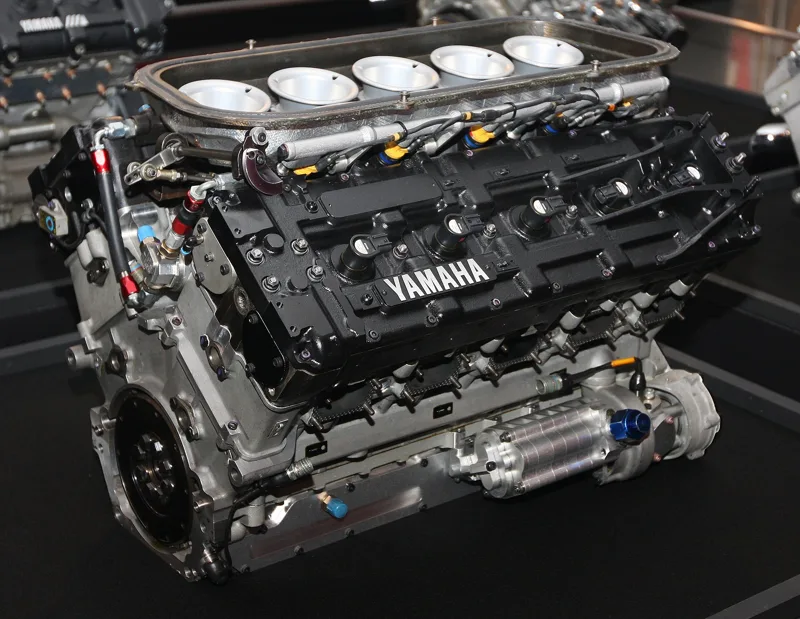
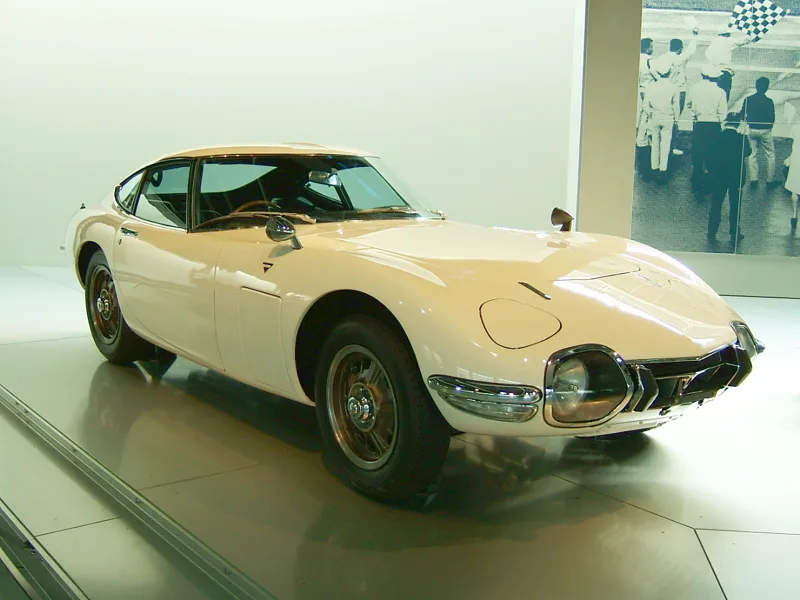
The five-valve head is rarer. It has two exhaust valves and three inlet valves, all of similar size. In theory its breathing is excellent and, because every valve is small, high revs and very high power are available. Its three inlet ports should fill the cylinder efficiently and create gas turbulence. Even so, it has been questioned whether the design brings a cost-effective benefit over four valves, and the rise of direct injection may make five-valve heads harder to engineer, since the injector has to take up space on the head. Yamaha built five-valve Genesis engines for several years before going back to the cheaper four-valve layout. Audi's 1.8 L 20vT engines, the later Ferrari Dino V8s and Toyota's 1.6 L 20-valve 4A-GE, developed with Yamaha, are examples.
Does adding more valves keep adding area?
| Valves per cylinder | Share of bore area covered |
|---|---|
| 2 | 50% |
| 3 | 64% |
| 4 | 68% |
| 5 | 68% |
| 6 | 66% |
| 7 | 64% |
| 8 | 61% |
These percentages come from simple geometry for a cylindrical bore and valves of equal size. They ignore the holes for spark plugs and injectors, which usually sit in the dead space between valves. In real heads with an even number of valves, the intake side is usually given the larger ones.
Where did multi-valve engines begin?
The first car with an overhead camshaft was the 1902 Marr, a single-cylinder with two valves. More valves came a few years later. Racing Aries VT cars of 1908 used supercharged 1.4-litre single-cylinder engines with four desmodromic valves each, and in 1910 Isotta Fraschini's Tipo KM put four valves per cylinder on a 10.6-litre single-cam four, rated at 100-140 bhp (75-104 kW).
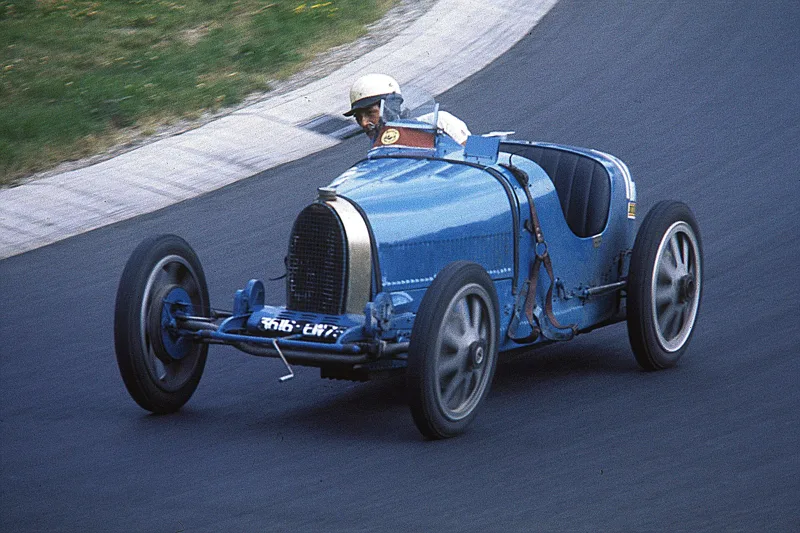
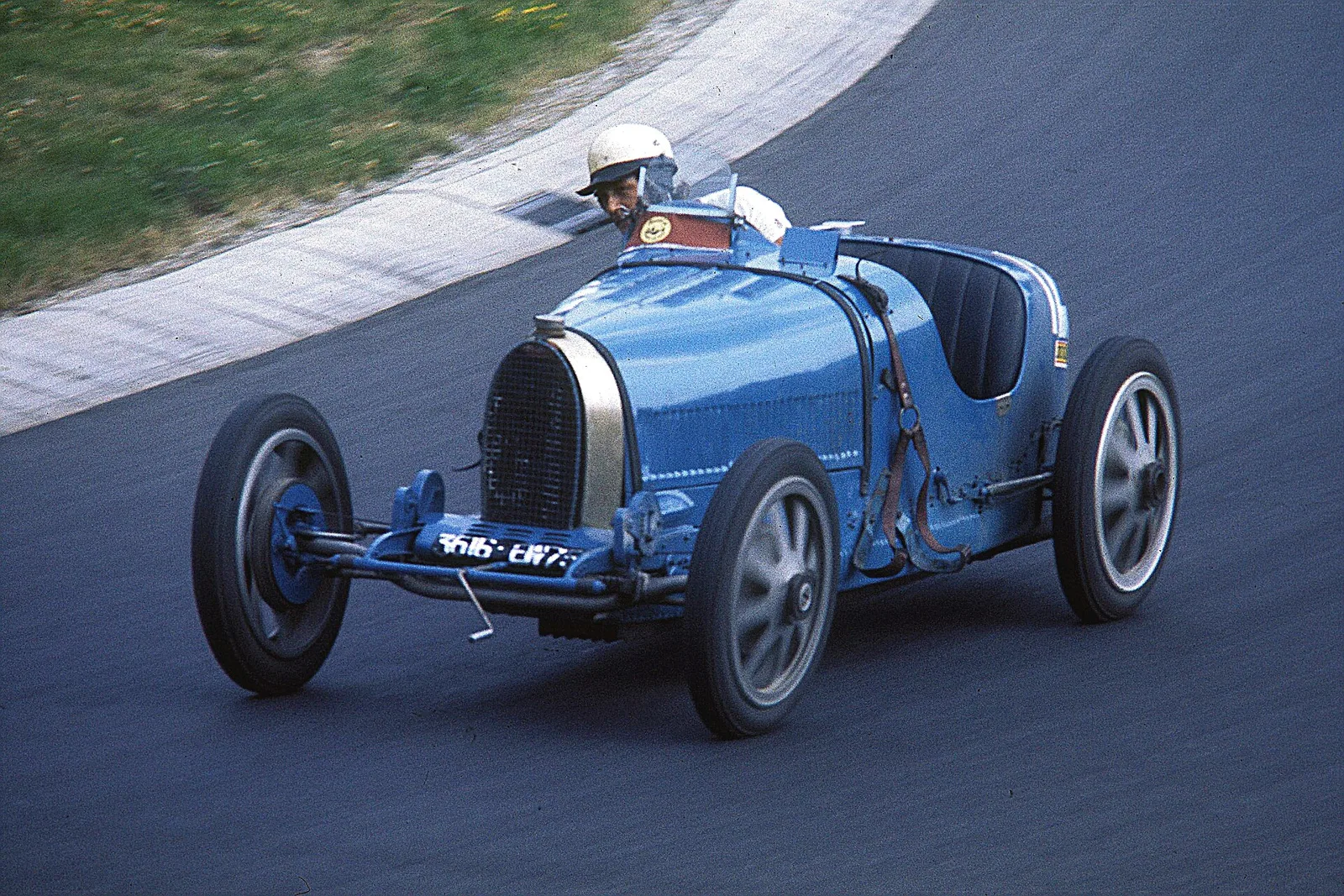
Ernest Henry's 1912 Peugeot L76 Grand Prix car was the first with twin overhead camshafts and four valves for each cylinder. Its 7.6-litre monobloc four had hemispherical combustion chambers and made 148 bhp (110 kW). A special L76 nicknamed la Torpille, the torpedo, broke the 170 km/h world speed record at Brooklands in England in April 1913. Robert Peugeot also commissioned the young Ettore Bugatti to build a Grand Prix car for 1912. This Type 18 had a 5-litre straight-four with a single camshaft and three valves per cylinder, two inlet and one exhaust. It made about 100 bhp at 2800 rpm and could reach 99 mph (159 km/h). Bugatti kept the three-valve head for the Type 29 of 1922 and the Type 35 of 1924, both of which had a 100 bhp 2-litre 24-valve straight-eight.
In America, designers turned to extra valves because the flathead engines of the day were not efficient. The 1917 Stutz four had a modified T-head with 16 valves, twin spark plugs and aluminium pistons and made 80 bhp (59 kW) at 2400 rpm from 360.8 cubic inches (5.8 litres); more than 2300 were built. Pierce-Arrow followed in 1919 with a 24-valve straight-six of 524.8 cubic inches (8.6 litres) that made 48.6 bhp and ran very quietly.
Bugatti's 16-valve 1.5-litre engine won the 1920 Voiturettes Grand Prix at Le Mans in the hands of Ernest Friderich, averaging 91.96 km/h, and in 1921 Bugattis took the first four places at Brescia. Every 16-valve Bugatti was named Brescia in honour, and about 2000 were built from 1920 to 1926. The Bentley 3 Litre of 1921 followed with four valves per cylinder under a single overhead cam.
By the 1930s the format had grown to eight cylinders: Stutz's 32-valve DV-32 of 1931, the supercharged Duesenberg SJ Mormon Meteor of 1935 with 400 bhp (298.3 kW) at 5,000 rpm, and the 1937 Mercedes-Benz W125 with 592-646 bhp (441.5-475 kW) at 5800 rpm and a top speed of about 200 mph (322 km/h).
After the war, the 1967 Cosworth DFV, a naturally aspirated 3.0-litre V8 making about 400 bhp (298 kW) at 9,000 rpm with four valves per cylinder, dominated Formula One for years and also raced in other categories.
Which production car came first with four valves per cylinder is argued over. For sixes, it appears to be the 1969 Nissan Skyline, with the S20 engine. Among fours the Ford Escort RS1600, with the Cosworth BDA 16-valve head, has a claim, as does the 1972 Jensen-Healey with its Lotus 907. All were relatively limited in production, so the first widely available and popularly priced car with four valves per cylinder is held to be the 1973 Triumph Dolomite Sprint, whose 1,998 cc single-cam 16-valve four made 127 bhp.
What does cylinder head porting actually change?
Cylinder head porting is the reshaping of the intake and exhaust ports to improve air flow. A production head is built for durability above all, which usually leaves it short of what racing needs. Work can aim at peak power, lowest fuel use or a mix of both, and the way power arrives can be tailored to a particular job.
Changes are decided by testing on an air flow bench. Material is then removed by hand with die grinders or by computer-controlled milling machines, and where a wall must grow, metal is welded on.
The results can be large. A stock Ford two-litre F2000 engine with its original head produced 115 horsepower at 5500 rpm, a brake mean effective pressure of 136 psi. An aftermarket Pro Stock racing head sat on an engine of 1300 horsepower at 9500 rpm and 238 psi, about as high as a naturally aspirated gas engine can go. Naturally aspirated Formula One engines typically reached 220 psi. Cams, revs and height limits also play a part, but port design is a major factor.
Does polishing a port help?
It is popularly held that porting means enlarging the ports as far as possible and giving them a mirror finish. That is not so. Some ports in highly developed, very high-speed engines are taken to their largest practical size because their dimensions have become a restriction. Elsewhere, larger ports flow more air and fuel at high revs but lose torque at low revs, because the mixture moves more slowly.
A mirror finish does not deliver what intuition suggests. Intake ports are normally left deliberately rough, with an even texture, so that fuel landing on the walls evaporates fast. Roughness on selected areas can also energise the boundary layer, which alters the flow path and may increase flow, in the way dimples do on a golf ball. On a flow bench, flow through a mirror-finished intake port and a roughly textured one typically differs by less than 1%. Exhaust ports can be smooth because the gas is dry and smooth walls resist build-up, and finishing with 300 to 400 grit and a light buff is regarded as close to ideal.
The reason is the boundary layer. At the wall, the air speed is zero, because the first layer of molecules sticks to the metal, and the rest of the flow shears past it. Surface roughness matters only if the high spots stand tall enough to reach the faster air toward the middle, and only a very rough surface does that.
How do waves in the port affect power?
When an intake valve opens, air does not simply rush in. The charge in the runner expands into the low-pressure space, and the air at the entrance stays put until that disturbance arrives. When the valve closes, the flow at the entrance carries on unaffected until the news arrives, and meanwhile pressure builds and runs back up the runner as a positive wave. This is what tuned intake and exhaust systems are tuned to exploit, and the principle is the same as the water hammer effect that plumbers know well.
The signal travels at the speed of sound in the runner, about 1,100 feet per second (340 m/s), which sounds fast. A 12-inch (300 mm) runner takes 0.9 milliseconds to cross, yet an engine running at 8500 rpm covers 46 crank degrees in that time. A shorter runner is not a fix. It would flow earlier but also die earlier, and it would return its positive waves too soon, tuned to a higher engine speed and weaker. The key is to balance all the factors for the engine in question.
The aim of tuning is to arrange runners and valve timing so that a high-pressure wave is present as the inlet valve opens, to get flow moving quickly, and a second wave arrives just before the valve closes, so that the cylinder fills as far as possible. The first wave is left over from the last cycle; the second is made in the current one. The factors often conflict, but when they line up, volumetric efficiencies of 140% are possible, similar to those of a decent supercharger. The effect lasts only over a limited range of revs.
How do hydraulic tappets work?
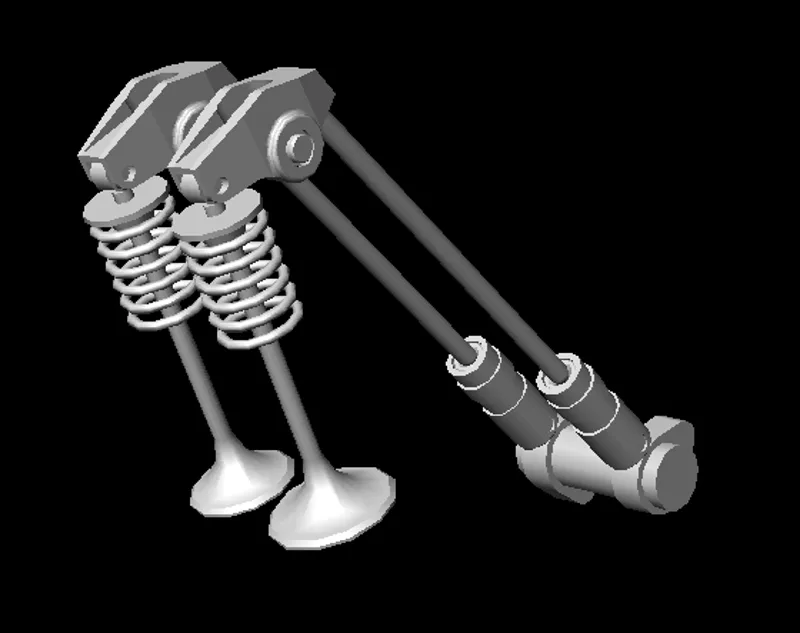
A tappet, also called a valve lifter or cam follower, converts the rotation of the camshaft into the straight-line motion that opens and closes a valve. Its first recorded use was in the valve gear of the 1715 Newcomen steam engine, where adjustable blocks on a rod pressed against levers to work the valves automatically.
Car engines use three main types: solid, hydraulic and roller. Tappets are usually circular and are allowed, even encouraged, to rotate in place, so the camshaft does not wear a groove by rubbing the same spot every cycle. The base of a plain tappet is slightly domed so that the leading edge of the lobe meets it gently. A finger follower, a pivoting beam, is the alternative in some high-performance double-cam engines, mostly in motorcycles and sports cars.
On most overhead-valve engines the clearance is set with a screw in the rocker arm, adjusted against a feeler gauge. Too large a gap causes wear and poor performance, while too small a gap can bend pushrods or burn valves. A locknut secures the screw, and loose screws can cause catastrophic failure, which in aircraft has led to fatal crashes.
A hydraulic tappet does the adjusting itself. It contains a small hydraulic piston filled with pressurised engine oil, which acts as a spring and sets the clearance according to oil pressure. The piston moves only a little and seldom, but enough to make the valve gear self-adjusting, so nobody has to set the clearances by hand. It needs clean oil at the correct pressure, and on a cold start, while pressure is still low, hydraulic tappets often clatter briefly until they find their position.
Early car engines used roller tappets, but plain flat ones became far more common as engine speeds rose. Rollers have lately made a comeback, on tappets and on rocker arm ends, because their lower friction brings greater efficiency.
How does the valve train change with the engine layout?
In sidevalve engines, common until the 1950s, tappets pushed the valves directly, and mechanics adjusted the gap at the tappets, sometimes by grinding the end of the valve stem. Pushrod engines keep the tappets in the block, where they drive long, thin pushrods.
In a single-cam engine the tappet is built into the rocker arm. Mass production of these for passenger cars became common in the 1970s, and the Ford Pinto engine, built from 1970 to 2001, was one of the first with a toothed belt. The sliding tappet end wore quickly and needed oil containing zinc additives. The 1973-1980 Triumph Dolomite Sprint ran 16 valves from a camshaft with just 8 lobes, through a cunning arrangement of rocker arms.
Double-cam engines began as high-performance aircraft and racing units, with the camshafts directly over the valves driving them through a simple bucket tappet. The clearance is usually set with a small shim above or below the tappet, chosen from a range of standard thicknesses. In early designs the camshaft had to come out to change a shim, which was slow work. Later designs put the shim on top of the tappet, so each could be swapped without removing the tappet or camshaft, though the rubbing surface then becomes the shim, a hard problem of metallurgy for mass production. The first production engine to use it was the Fiat Twin Cam, built from 1966 to 2000, and Volvo and water-cooled Volkswagen engines followed.
What is still changing in valve gear and ports?
Five-valve heads are caught between a theoretical advantage and a doubt about their cost-effectiveness, with direct injection adding to the difficulty. Roller tappets have returned for the sake of lower friction, and port shapes keep being developed on the air flow bench, where the aim for each engine is a balance of power, economy and the way power is delivered.