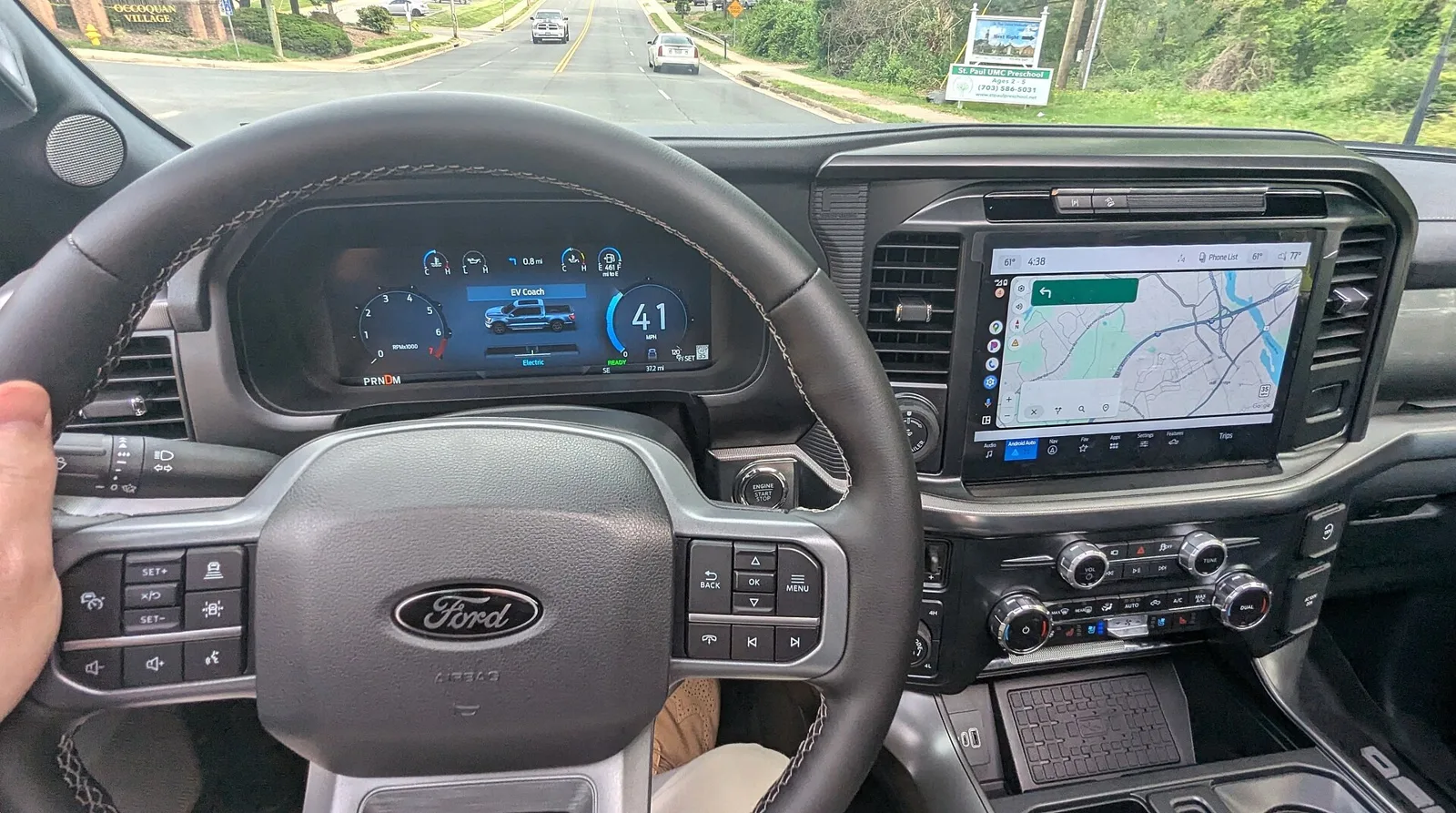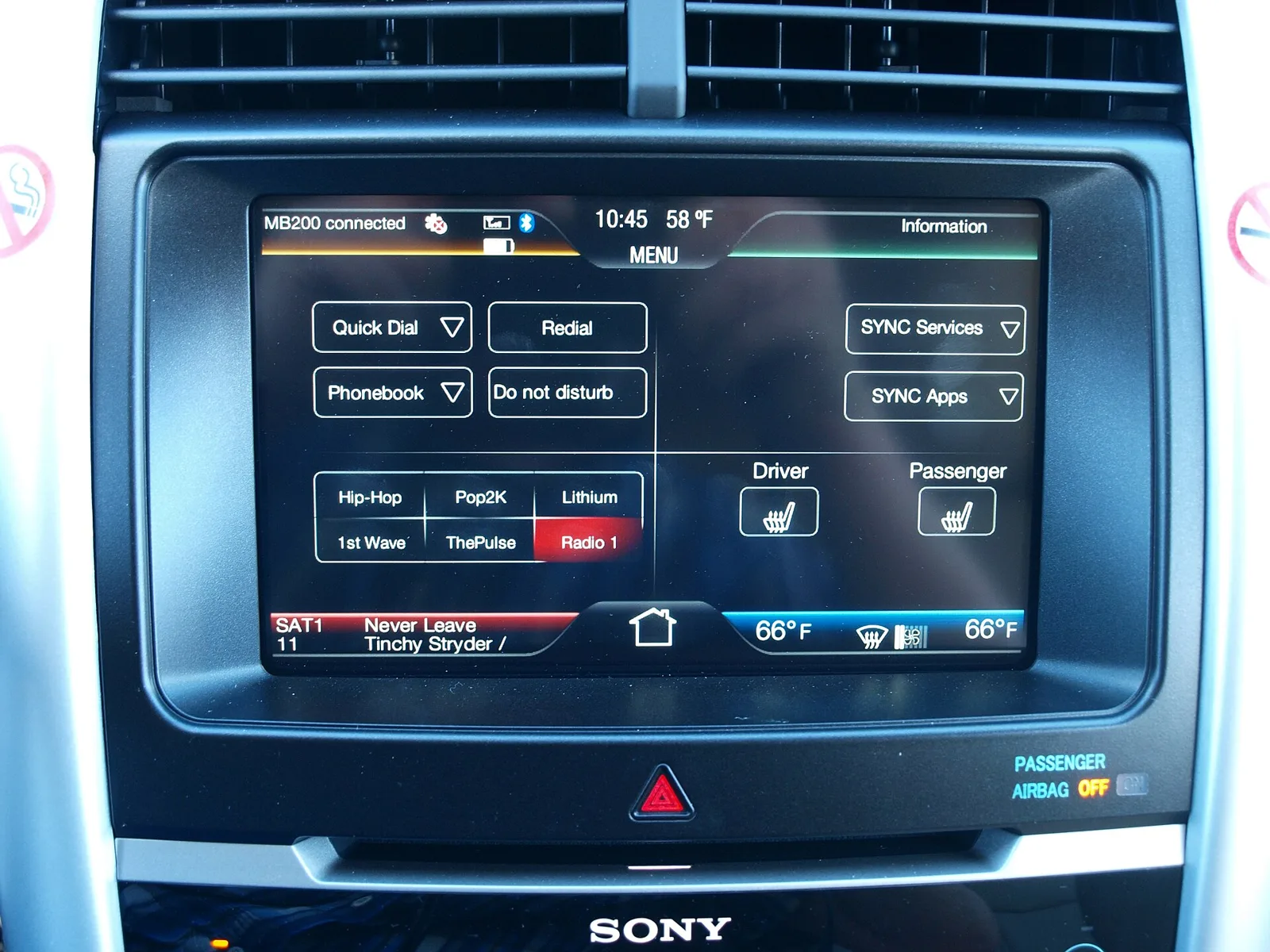
A control dial, a touchscreen that sank Ford's quality ranking and two Toyota subscription systems show how early car infotainment developed.
Four early infotainment systems competed for space on the dashboard, and each took a different route. Audi's MMI used a control dial from 2002, Ford's MyFord Touch a Microsoft-based touchscreen from 2011, and Toyota's Entune and G-Book relied on subscriptions and phone-linked services that were later discontinued.
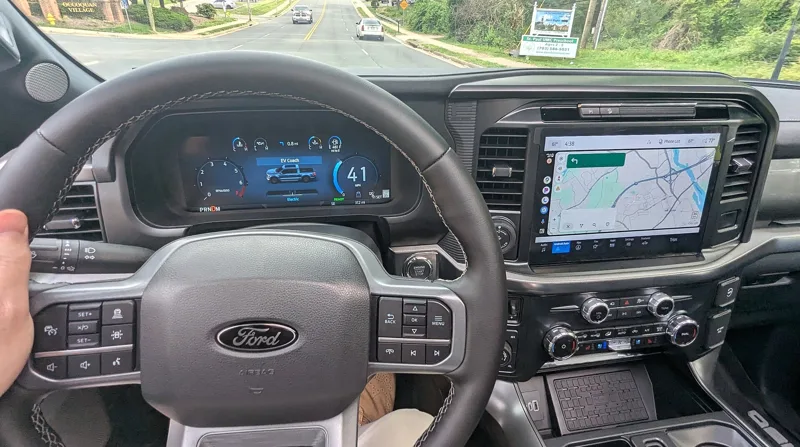
When J.D. Power published its 2011 Initial Quality Survey, Ford dropped to 23rd place from fifth the year before, and the study blamed the in-car system called MyFord Touch as the primary cause. Lincoln, which used the same technology under the MyLincoln Touch name, fell from eighth to 17th.
What were MyFord Touch, Entune, MMI and G-Book?
They are four early in-car infotainment and telematics systems. Audi's MMI is a dial-and-screen interface that reached production in late 2002, Ford's MyFord Touch launched on the 2011 Edge, Toyota's Entune appeared in 2011, and G-Book is the Toyota subscription service on which Entune was based.
The four took different approaches. Audi bet on a single control dial, Ford on a touchscreen and voice, and Toyota on subscriptions and phone-linked apps. Their histories also ended differently, with the MMI family still evolving while Entune and G-Book have been switched off.
Audi bet on a single control dial, Ford on a touchscreen and voice, and Toyota on subscriptions and phone-linked apps.
Four early infotainment systems side by side
| System | Maker | Introduced | Approach | Status |
|---|---|---|---|---|
| MMI | Audi | Concept 2001; production late 2002 | Control dial and screen | Developed through the MIB generations; MIB4 from 2024 |
| MyFord Touch (SYNC 2) | Ford | Announced January 2010; 2011 Edge | Touchscreen and voice, Microsoft software | Discontinued as an option in Q4 2015; Sync 3 followed |
| Entune | Toyota | 2011 Prius v | Phone apps and subscription services | Services fully discontinued 30 October 2023 |
| G-Book | Toyota (Japan) | Optional on Japanese-market cars from model year 2007 | Telematics subscription | Discontinued 31 March 2022 |
How does Audi's MMI work?
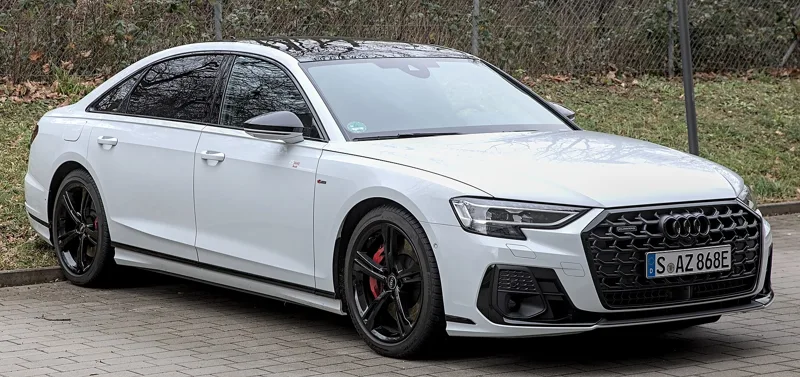
Audi first showed the Multi Media Interface in 2001, on its Avantissimo concept at the Frankfurt Motor Show, and the production version arrived in the second-generation A8 in late 2002. It folds many car functions into one terminal and one display.
The heart of it is a control dial. Turn it and you scroll through menus; press it and you select. From the MMI 3G generation a joystick sits inside the dial, handy for moving around a map, and four to eight function buttons surround it. The screen is either a five-inch monochrome black-and-red unit or a seven-inch 16:9 colour display. Harman Becker builds the system, which runs QNX Neutrino real-time software and links the car's electronics using Media Oriented Systems Transport.
It covers satellite navigation with traffic management, the radio tuner, media sources such as the CD changer, aux port and TV tuner, the phone and directory, climate and seat heating, and car settings from central locking to suspension, interior lighting and Audi Side Assist. It also shows the rear camera and parking sensors, fuel economy and tyre-pressure data, and the full owner's manual. Apple CarPlay and Android Auto were added for 2014 and later models. Which functions you get depends on the car and the version, such as MMI Basic or MMI High.
Not every Audi screen with a dial is a true MMI. Certain cars, among them the R8, TT (8J), A6 (C5), A4 (B6 and B7) and A3 (8P), as well as the SEAT Exeo and Lamborghini Gallardo, carry the DVD-based RNS-E, a lookalike that cannot share maps or software with MMI and cannot control functions such as climate, convenience or suspension. On B8-family cars without full navigation, Audi does not describe the system as MMI at all.
Operation while driving was a weak point. The system can be hard to use on the move, the joystick was one attempt to help, and the Audi Q5's controls sit low on the centre console, which makes it harder still.
How do MMI software and map updates work?
An Audi dealer must update 3G and 3G+ systems, but owners can update 2G firmware themselves, using a CD, while the maps are read live from a DVD drive in the boot.
Updating 3G and 3G+ from SD card, USB, CD or DVD takes about 1 hour and 45 minutes, and the navigation then needs a PIN to reactivate. The update menu opens when Setup and Return are held together for five seconds, and it can export settings to USB or SD as an encrypted file.
What is Audi's Modular Infotainment Matrix?
The Modular Infotainment Matrix, or MIB, is an architecture designed around a simple problem: consumer electronics and computing power advance much faster than car product cycles. Its central computer sits in the glove box and pairs a control unit with a swappable MMX board carrying an Nvidia Tegra processor.
Because the board can be exchanged, Audi can keep the hardware current. The MIB debuted in 2012 in the Audi A3 with an NVIDIA T 20 chip. About a year and a half later the second stage reached the Audi TT and the new A6 and A7 Sportback, with a quad-core T 30 that draws 3D graphics on two displays at once. A Tegra 4 chip powers a 10.1-inch Audi tablet for rear-seat entertainment, which debuted in the new Q7 and links to the car over WLAN.
The MIB navigation system was the first that let customers update maps themselves, by downloading from the myAudi site or over the air. The 2015 to 2016 A3 with MIB1 lacks the over-the-air option and uses an SD card. For MIB1 and MIB2 cars map updates are free for three years after the production date, covering the next five releases, with new releases around calendar weeks 22 and 45 each year.
MIB3 is the Volkswagen Group's third generation, rolled out across VW, Audi, Skoda and Cupra/Seat from 2019 to 2020. A built-in eSIM keeps it online for over-the-air updates, real-time traffic and cloud-saved profiles, and it added wireless Apple CarPlay and Android Auto, touch-sensitive sliders in place of buttons and voice assistants such as Skoda's Laura. Early production years, 2020 to 2022, were widely known for software bugs that firmware updates gradually resolved. MIB4, introduced from 2024 in the Golf, Passat and Tiguan, brought a rethought interface, quicker processing and AI features.
What was MyFord Touch?
MyFord Touch, sold in Lincolns as MyLincoln Touch and later known as SYNC 2, was Ford's in-car communications and entertainment system based on Microsoft technologies. It was the next generation of Ford Sync, announced at CES in January 2010 and launched on the 2011 Ford Edge.
It promised drivers an easy link to mobile phones, PDAs and media players through voice commands, the touchscreen, steering-wheel and radio controls, Bluetooth and Wi-Fi, and it could read incoming text messages aloud. As a stand-alone option it cost $1,000 and brought two 4.2-inch colour displays in the instrument cluster, an 8-inch touchscreen, a media hub with two USB ports, an SD card reader and RCA video inputs, with a free three-year prepaid subscription covering 911 Assist, Vehicle Health Reports, traffic and GPS directions.
Navigation came from an optional SD card using TeleNav, traffic alerts came from INRIX, and weather maps, gas prices and movie listings came via SIRIUS Travel Link. The 911 Assist function gave occupants a 10-second window to cancel an automatic emergency call, and it was not offered outside North America. The Vehicle Health Report was discontinued on 1 August 2018.
Why was MyFord Touch criticised?
Reviews were overwhelmingly negative. Owners complained that the system crashed without warning, ignored touch commands and failed to pair reliably with phones and iPods, and Consumer Reports and J.D. Power ratings for Ford fell sharply. Consumer Reports recommended that car buyers should not consider Ford or Lincoln models fitted with it.
The 2011 J.D. Power survey ranked Ford 23rd, down from fifth, and Lincoln fell from eighth to 17th, with the system cited as the main reason. Consumer Reports even advised against buying a used 2011 Edge with the system.
Ford answered in March 2012 with a free software upgrade on a USB drive, mailed to customers, which overhauled the interface and was largely well received. It did not cure the complaints about the capacitive switches, which lack a positive feel and are very hard to use with gloves. Later updates improved menu lag, voice recognition and Bluetooth pairing, and Ford lengthened cover on the system to five years and unlimited mileage, against three years or 36,000 miles before.
The real fix was a new platform. From 2015 Ford moved to BlackBerry's QNX CAR Platform, called Sync 3, which has proved much more responsive and stable, but MyFord Touch owners do not appear to be offered an upgrade to it. SYNC 2 was officially discontinued in the fourth quarter of 2015.
Software support wound down quietly. Version 3.10 was released on 16 November 2017, more than seven years after an official update, and it is hard to get in Europe, where dealers are often reluctant to install it. Once applied it cannot be downgraded.
Which cars had MyFord Touch?
In North America it began with the 2011 Edge and Explorer and the Lincoln MKX. The Focus followed for 2012, then the Fusion, Flex, Taurus, F-150, Escape and C-Max for 2013, the Fiesta in 2014 and the Mustang, Transit and Expedition in 2015. The Lincoln Continental carried it from 2017.
Elsewhere it was branded SYNC 2 in the Ford Everest and Ranger (Asia Pacific, 2015), the Falcon and Territory (Australia, 2014) and the Focus and Tourneo Connect in Europe, with the Mondeo also fitted from 2015.
What was Toyota Entune?
Entune was a multimedia, navigation and telematics system for Toyota cars. Satellite-delivered fuel prices, stocks, sports scores, weather and traffic arrived by SiriusXM subscription, and a phone running the Entune app added a browser and music services.
Based on Toyota's G-Book service, it was first released on the 2011 Prius v. The phone app supported iOS, Android and Blackberry, speech recognition was limited, and Safety Connect was optional. Lexus Enform grew out of the same technology.
Toyota began phasing Entune out in 2021 in favour of Toyota Audio Multimedia. Support for the phone app ended in 2023, its features folded into the Toyota app, and the Entune services were fully discontinued on 30 October 2023. In the United States it had been fitted to cars from the 4Runner and Camry to the Prius, RAV4, Sienna, Tacoma and Tundra, mostly from the 2012 model year.
Entune 3.0, launched in 2017 on the 2018 Camry, was a break with the past. It runs on Automotive Grade Linux rather than BlackBerry QNX, so it cannot use Entune 2.0 phone apps, though the open-source base could attract more third-party developers. It had three head unit levels, Audio, Audio Plus and Premium Audio, and could be updated by USB drive and, in some cases, over the air. In April 2019 Toyota said it would offer free backward compatibility to the 2018 Sienna and Camry, with a download dated 6 May 2019.
What did Entune's connected services offer?
Subscription services on the higher trims covered Service Connect, Safety Connect, Remote Connect, Wi-Fi Connect, Destination Assist and Dynamic Navigation. Each did a distinct job, from vehicle reports to a 24-hour operator.
Service Connect sent vehicle health reports and maintenance alerts, which could go to the servicing dealer. Safety Connect called a 24-hour response centre automatically after an airbag deployment or severe rear-end collision, and also offered an SOS button, roadside help and a stolen vehicle locator across the continental United States. Remote Connect could find the car, start or stop its engine for up to 10 minutes and lock or unlock the doors, which re-lock after 30 seconds.
Wi-Fi Connect used the AT&T network to give up to five devices 4G LTE data. Destination Assist let an operator find a business or address and send it straight to the head unit, and Dynamic Navigation checked embedded maps against the cloud to adjust guidance to traffic. The app suite at launch included Yelp, iHeartRadio, NPR One, Amazon Alexa, Slacker Radio and LiveXLive alongside Pandora, but Pandora, OpenTable and Facebook Places left it on 13 November 2018.
What was Toyota G-Book?
Toyota ran G-Book in Japan as a telematics subscription for its Toyota and Lexus vehicles. It linked touchscreen terminals in the car with cellphones, PDAs and PCs, using the information infrastructure formerly known as GAZOO.
It replaced the need to update CD or DVD navigation maps by sending map data over the internet through the driver's phone. Toyota made G-Book optional on all Japanese-market Toyota, Daihatsu and Lexus models from model year 2007, and it also reached China, with a Beijing Camry in 2009 and Lexus models that year. Lexus customers in Japan had the proprietary G-Link, launched in 2005 with a 24-hour owner's desk hotline.
The service came in three versions, G-Book mX, G-Book Alpha and plain G-Book, with Pro variants of the first two. It offered an operator-guided Live Navigation, tow-truck requests, news and weather, email and message boards, shopping through the GAZOO mall and an operator for other problems. The mX version added Probe Communication Traffic Information, which gathered speed and position data from cars through their data communications module to suggest alternate routes, an approach Toyota marketed as kinder to the environment.
In Japan the module used KDDI's CDMA2000 1x network at up to 144 kbit/s, with faster EV-DO versions reaching 2.4 Mbit/s and adding hands-free calls, stolen-vehicle tracking and airbag emergency notification. China-market cars did not get map updates or music downloads, and had traffic data only in Shanghai, Beijing, Guangzhou and Shenzhen. A 2002 design stored maps on an SD card that could be refreshed at E-TOWER terminals in convenience stores.
Toyota worked with Mitsubishi, Subaru and Daihatsu to offer the service in Japanese, Mazda agreed to offer it, and Nissan's CarWings and Honda's Internavi were similar. In the United States, Safety Connect was based on the G-Book architecture, and G-Book services were discontinued on 31 March 2022.
What replaced each system
Audi's line continues through the MIB generations, and MIB4 arrives in 2024 models. For Ford, Sync 3 followed SYNC 2. Toyota is replacing Entune with Toyota Audio Multimedia and the Toyota app, and G-Book has ended.